
Having spent four essays detailing how difficult it is to rank one’s favorite music with both objectivity and methodological rigor (here, here, here, here), then using one such method to rank my 100 favorite tracks and albums, I conclude this series with an examination of my favorite artists and some final thoughts.
As with every stage in this process, there were unexpected pitfalls – and a few surprises – in the process.
***********
Having generated Track Scores (“TS”) for 9,560 tracks in my iTunes, then used them to calculate Album Scores (“AlS”) for 3,621 “albums” – defined as “form in which track was first released” – I thought it would a simple matter to sum these scores by artist to generate track and album values for each artist. Because I then planned to create an overall Artist Score (ArS) by adding the percentage each artist held of total TS and AlS, these sums needed to be positive.
I calculated TS by combining z-scores (difference between a variable value and its mean) for mix appearances and total lifetime plays. Because relatively few tracks have a significant number of plays and ever appeared on a mix, fully 74.9% (7,158) of TS had negative values. I first addressed this when calculating Album Scores by adding 0.757 to every TS, setting the median to 0. But this still left negative TS values, so I added an additional 0.255 to these tracks – 1.012 in total – to guarantee a minimum TS of 0.064, the equivalent of adding one play and zero mix appearances to a track’s TS.
Summing across artists yielded 1,350 unique “artists,” though this included such distinctions without a difference as “Bob Seger,” “Bob Seger System” and “Bob Seger and the Silver Bullet Band.” It also created such joint artists as “Queen and David Bowie” for the 1981 single “Under Pressure.”
Nonetheless, the resulting ranking has extremely high face validity, even if The Waterboys – whose 21 total tracks tie for #110[1] – sits at #7 overall, while King Crimson – whose 63 tracks put them at #13 – sits at #31 overall. The difference is that The Waterboys have an average TS of 4.12, while King Crimson averages just 0.82.
This was the easy part.
Far harder – and where I most second-guess my methodology – was aggregating AlS by artist. Because there are different album types, from traditional albums (ranging widely by number of tracks and by type – studio, live, best-of) to EPs and 12”-singles to traditional singles to “one-off” releases, as well as a split between complete and incomplete digitization, I could not simply add a constant value to every track or collection of tracks into an “album.” Either an album like Johnny Mercer’s My Huckleberry Friend, whose 25 tracks combine for 35 total plays and exactly one mix appearance (“One For My Baby (and One More For the Road)”), giving it an AlS of -9.836 is still negative even after adding 0.255 for each track, or vault an artist like Billie Holiday into the top 10 by over-adjusting her 51 one-off-releases (91, counting 40 recorded with Lester Young).
After much to-ing and fro-ing, I decided to add to every artist’s initial sum of AlS:
- 10.120 for each traditional album (n=492): the added value of 1.012 times 10, the standardized number of tracks per album
- 2.024 for non-traditional albums (n=3,228): 10.120 divided by 5, arbitrarily standardizing them to two tracks
Before I could add these values, however, I had to disaggregate 20 albums containing tracks by multiple artists – primarily soundtracks – into distinct “albums.” For example, I broke the Saturday Night Fever Original Soundtrack into a 4-track Bee Gees “album,” a 3-track David Shire “album,” and 1-track albums by Yvonne Elliman, Ralph MacDonald and Tavares. The resulting 99 non-traditional albums increase the overall total to 3,720.
Having completed these adjustments, I summed across artists, collapsing an additional six tracks into three artists.[2] I then computed a Historic Adjustment (“HA”) for each artist, just as I had for tracks and albums. This ranking consisted, first, of my top 12 artists in 1981 (weighted 1/43), my top 100 artists in 1993 and 1995 (13/43, 15/43), and my top 75 artists in 1999 (19/43); I assigned “3” to my favorite artist, “2” for other top 10 artists and “1” for all other artists. I also gave 50% weight to the number of albums I own by an artist which were not otherwise credited (e.g., a best-of with no new tracks recorded for it) and to the number of times I have seen an artist live. Finally, there is the Other category, also given 50% weight, which includes such things as number of other media I own pertaining to the artist (videos/DVDs, books, sheet music collections) and number of mixes dedicated to the artist.
As with tracks and albums, I calculated HA by summing the weighted values, dividing by 10 and adding 1.000. A total of 249 artists received HA, averaging a boost of 10.8%, topped by boost>50% for Miles Davis, Genesis and Roxy Music.
With this completed, I sorted by Final Score…and held my breath, anticipating my first new official artist ranking in 25 years.
***********
My patience was duly rewarded, as will see shortly, though there was still the matter of both aggregating artists into “Meta-Artists” (e.g., Bob Seger et al.) and disaggregating artists sharing credit for the same track/album (e.g., Queen and David Bowie); in the latter case I assigned equal proportions of the two scores to each contributing artist.[3] This reduced the number of meta-artists to 1,290; they average 7.6 tracks and 2.9 albums (0.4 traditional, 2.5 other). For simplicity, however, we refer to them as “artists.”
My 100 favorite artists by Artist Score are presented in Table 1 below, along with their top-ranked tracks and albums (including, where applicable, any in the top 250). Asterisk indicates an album I do not currently own.
Table 1: Matt Berger’s 100 Favorite Artists (as of May 2024)
| # | Artist | Top Track(s) / Top Album(s) | Artist Score |
| 100 | Chris Isaak | #229. “Can’t Do A Thing (To Stop Me)” #250. San Francisco Days #214. Heart Shaped World | 0.233 |
| 99 | The Eagles | #113. “In the City” #47. “I Can’t Tell You Why” #103. The Long Run | 0.233 |
| 98 | George Winston | (#414. “Carol of the Bells”) #238. December #177. Autumn | 0.235 |
| 97 | Tori Amos | (#1416. “Crucify”) #155. Under the Pink | 0.236 |
| 96 | The Tubes | #36. “Prime Time” #164. Remote Control | 0.236 |
| 95 | Adam Ant / The Ants | #42. “Dog Eat Dog” (#256. Kings of the Wild Frontier*) | 0.236 |
| 94 | The Doobie Brothers | #242. “What a Fool Believes” #184. “It Keeps You Runnin’” #142. “Dependin’ On You” #109. “Black Water” (#1064. Minute by Minute*) | 0.238 |
| 93 | Cartoon Planet Band | (#928. “Stain”) (#322. Space Ghost’s Musical Bar-B-Que) | 0.239 |
| 92 | Rush | #146. “Spirit of Radio” #97. Moving Pictures | 0.240 |
| 91 | Talk Talk | #165. “Talk Talk” (#539. Natural History: The Very Best of Talk Talk) | 0.243 |
| 90 | ABC | #183. “Tears Are Not Enough” #15. The Lexicon of Love | 0.244 |
| 89 | Gordon Lightfoot | #133. “The Wreck of the Edmund Fitzgerald” (#1278. Sit Down Young Stranger*) | 0.245 |
| 88 | The Psychedelic Furs | #202. “Love My Way” (#273. The World Outside) | 0.245 |
| 87 | Chicago / Transit Authority | (#425. “(I’ve Been) Searchin’ So Long”) (#661. Chicago (aka Chicago II)) | 0.248 |
| 86 | Michael Jackson | #224. “Human Nature” #73. “Off the Wall” #159. Thriller #132. Off the Wall | 0.249 |
| 85 | Dionne Warwick | (#491. “Déjà Vu”) (#476. “Don’t Make Me Over” single) | 0.250 |
| 84 | Frankie Goes to Hollywood | (#545. “The Power of Love”) #80. Welcome To the Pleasure Dome | 0.251 |
| 83 | John Coltrane | (#1953. “Naima”) (#333. My Favorite Things) | 0.252 |
| 82 | Wall of Voodoo | (#540. “Call of the West”) #204. Dark Continent #55. Call of the West | 0.253 |
| 81 | Simon & Garfunkel | #185. “Scarborough Fair/Canticle #237. Parsley, Sage, Rosemary and Thyme #191. Bridge Over Troubled Water | 0.254 |
| 80 | Madonna | (#266. “Lucky Star”) (#480. “Into the Groove” single) | 0.257 |
| 79 | Lush | #64. “Superblast!” #61. “Nothing Natural” #30. Spooky | 0.257 |
| 78 | The Beach Boys | #77. “Good Vibrations” (#268. Pet Sounds) | 0.258 |
| 77 | Pere Ubu | #70. “Why Go It Alone?” #29. Dub Housing | 0.265 |
| 76 | Echo & the Bunnymen | #134. “The Killing Moon” (#352. Echo & the Bunnymen) | 0.265 |
| 75 | Squeeze | (#410. “If I Didn’t Love You”) #198. Argybargy | 0.268 |
| 74 | The Pretenders | (#502. “Private Life”) #51. Pretenders | 0.269 |
| 73 | Ministry | #205. “Effigy (I’m Not An)” #47. With Sympathy | 0.271 |
| 72 | Stevie Wonder | (#587. “As”) (#326. Songs In the Key of Life) | 0.276 |
| 71 | Soft Cell | (#427. “Youth”) #17. Non-Stop Erotic Cabaret | 0.280 |
| 70 | Shriekback | #57. “All Lined Up” #45. “Clear Trails” #52. Care | 0.283 |
| 69 | The Rolling Stones | (#325. “Gimme Shelter”) (#563. Sucking in the Seventies) | 0.283 |
| 68 | Brian Eno | #180. “Julie With” #7. Before and After Science | 0.294 |
| 67 | Tony Banks | (#661. “Thirty-threes”) #208. The Fugitive #163. Soundtracks | 0.299 |
| 66 | Prince / The Revolution | (#255. “Little Red Corvette”) #79. Purple Rain Original Sountrack | 0.302 |
| 65 | Billie Holiday | (#1782. “God Bless the Child”) (#590. “God Bless the Child” recorded (1951)) | 0.302 |
| 64 | Oingo Boingo | #241. “Private Life” #100. “Just Another Day” (#345. Dead Man’s Party*) | 0.305 |
| 63 | The Moody Blues | #195. “The Story in Your Eyes” #151. “The Voice” (#262. Long Distance Voyager) | 0.310 |
| 62 | Electric Light Orchestra | #201. “Another Heart Breaks” #231. Time | 0.315 |
| 61 | Supertramp | (#445. “Take the Long Way Home”) #178. Crime of the Century #59. Breakfast in America | 0.316 |
| 60 | The Clash | (#259. “London Calling”) (#251. London Calling) | 0.317 |
| 59 | The Human League | #228. “The Lebanon” #20. “The Sound of the Crowd” #13. Dare! | 0.324 |
| 58 | Louis Armstrong | (#632. “West End Blues”) (#521. “West End Blues” recorded (1928)) | 0.331 |
| 57 | Tears For Fears | #206. “Pale Shelter” #82. “Change” #20. The Hurting | 0.333 |
| 56 | Public Image Ltd. | #80. “Save Me / Reprise” #56. Happy? | 0.357 |
| 55 | The Who | (#440. “Eminence Front”) #138. Who’s Next | 0.361 |
| 54 | The Cure | #238. “A Night Like This” #245. Disintegration #205. The Head on the Door | 0.363 |
| 53 | Berlin | #119. “You Don’t Know” #66. “Sex (I’m A…)” #22. Pleasure Victim | 0.364 |
| 52 | Spandau Ballet | #56. “Communication” #35. “Gold” #21. True | 0.366 |
| 51 | Simple Minds | #2. “Promised You a Miracle” #19. New Gold Dream (81/82/83/84) | 0.374 |
| 50 | Kraftwerk | (#407. “Computer Love”) #219. Trans-Europe Express #183. The Man Machine #172. Autobahn #48. Computer World | 0.379 |
| 49 | Mark Isham | #187. “The Massacre” #145. “The Public Eye (End Credits)” #7. “The Public Eye” #18. The Public Eye Original Soundtrack | 0.386 |
| 48 | Hall and Oates | #245. “I Can’t Go For That (No Can Do)” #150. “It’s a Laugh” #126. “One on One” #157. Voices | 0.389 |
| 47 | Duran Duran | #59. “Last Chance on the Stairway” #12. Rio | 0.407 |
| 46 | Bob Seger / Silver Bullet Band | #46. “Mainstreet” #240. Stranger in Town #89. Night Moves | 0.408 |
| 45 | A Flock of Seagulls | #171. “(It’s Not Me) Talking” #14. “Nightmares” #24. A Flock of Seagulls | 0.409 |
| 44 | Bryan Ferry | #6. “Zamba” #7. Bête Noire | 0.413 |
| 43 | The Smithereens | #199. “Blood and Roses” #30. “Especially For You” #23. Green Thoughts | 0.421 |
| 42 | John Barry | #152. “Main Titles” (HAMMETT) #106. The Cotton Club Original Soundtrack #32. Hammett Original Soundtrack | 0.423 |
| 41 | Gary Numan / Tubeway Army | (#267. “Are ‘Friends’ Electric?” (TA)) (#256. “I Die: You Die” (GN)) #45. Replicas (TA) | 0.424 |
| 40 | Crowded House | (#485. “Private Universe”) (#282. Temple of Low Men) | 0.428 |
| 39 | The B-52’s | #147. “Topaz” #244. Mesopotamia #218. Whammy! #114. The B-52’s #92. Cosmic Thing | 0.444 |
| 38 | The Stranglers | #19. “Golden Brown” #9. “All Roads Lead to Rome” #65. Feline | 0.453 |
| 37 | Uncle Bonsai | #221. “Silent Night” #40. “He Must Have Been a Genius” #188. Boys Want Sex in the Morning #60. A Lonely Grain of Corn | 0.456 |
| 36 | INXS | #15. “Don’t Change” #141. X #14. Shabooh Shoobah | 0.465 |
| 35 | The Smiths | #162. “How Soon Is Now?” #190. Meat Is Murder #109. The Queen Is Dead | 0.476 |
| 34 | Pink Floyd | #85. “One of These Days” #239. Dark Side of the Moon #212. Animals #115. Meddle #90. Wish You Were Here | 0.480 |
| 33 | Icehouse | #63. “Icehouse” #24. “Street Café” (single version) #243. Measure For Measure #186. Primitive Man #88. Icehouse | 0.481 |
| 32 | Led Zeppelin | (#483. “Kashmir”) #230. Led Zeppelin #229. Physical Graffiti #220. Led Zeppelin IV #202. Led Zeppelin II #201. In Through the Out Door | 0.482 |
| 31 | Robert Palmer | #89. “I Didn’t Mean to Turn You On” #76. “Can We Still Be Friends?” #33. “Johnny and Mary” #295. Clues* | 0.484 |
| 30 | Depeche Mode | #60. “Get the Balance Right” #100. Music For the Masses #74. Violator | 0.491 |
| 29 | Phil Collins | #177. “I Don’t Care Anymore” #93. “We Said Hello Goodbye” #189. Hello, I Must Be Going #169. No Jacket Required #118. Face Value | 0.492 |
| 28 | Joy Division | #217. “Love Will Tear Us Apart” #38. “Transmission” #125. Unknown Pleasures | 0.501 |
| 27 | Duke Ellington | #312. “Tenderly” #81. Ellington Indigos | 0.504 |
| 26 | Bruce Springsteen | (#544. “Tunnel of Love”) #166. Darkness On the Edge of Town #8. Born To Run | 0.511 |
| 25 | Yes | #226. “Run Through the Light” #140. Fragile #70. Drama | 0.519 |
| 24 | R.E.M. | #261. “Pretty Persuasion” #217. Reckoning #116. Out of Time | 0.532 |
| 23 | Ultravox | #243. “Visions in Blue” #173. “Vienna” #78. “Reap the Wild Wind” #39. Vienna #6. Quartet | 0.533 |
| 22 | The Alan Parsons Project | #178. “Some Other Time” #91. “Damned If I Do” #63. I Robot #46. Eve | 0.539 |
| 21 | Rupert Holmes | #111. “Remember WENN End Title” #48. “In You I Trust” #4. “Him” #87. Swing #11. Partners In Crime | 0.556 |
| 20 | The Fixx | #231. “Saved By Zero” #223. “Read Between the Lines” #21. “Red Skies” #137. Reach the Beach #76. Shuttered Room | 0.578 |
| 19 | Split Enz | #53. “I Got You” #211. Time and Tide #66. True Colors #47. Waiata | 0.613 |
| 18 | Elton John | #67. “Love Song” #210. Tumbleweed Connection | 0.620 |
| 17 | The Waterboys | #196. “The Big Music” #175. “World Party” #8. “When Ye Go Away” #4. Fisherman’s Blues | 0.642 |
| 16 | U2 | #246. “I Will Follow” #179. “Drowning Man” #142. Boy #122. The Unforgettable Fire #82. War | 0.652 |
| 15 | Yello | #118. “I Love You” #84. “The Evening’s Young” #93. You Gotta Yes to Another Excess #84. One Second #50. Claro Que Si | 0.672 |
| 14 | King Crimson | (#264. “Sheltering Sky”) #242. Three of a Perfect Pair #213. Larks’ Tongues in Aspic #136. Beat #119. In the Court of the Crimson King #61. Discipline | 0.703 |
| 13 | Fleetwood Mac | #131. “Hypnotized” #87. “That’s All For Everyone” #160. Fleetwood Mac #149. Tusk #78. Rumours | 0.742 |
| 12 | Steely Dan | (#331. “Hey Nineteen”) #156. The Royal Scam #108. Gaucho #98. Can’t Buy A Thrill #95. Katy Lied #38. Aja | 0.787 |
| 11 | David Bowie | #129. “This Is Not America” #116. “Ashes to Ashes” #226. Scary Monsters #168. The Rise and Fall of Ziggy Stardust and the Spiders From Mars #128. Station to Station #127. Aladdin Sane | 0.862 |
| 10 | The Police | #200. “Omega Man” #121. “Wrapped Around Your Finger” #90. “Secret Journey” #22. “Bring On the Night” #3. “Darkness” #129. Regatta De Blanc #121. Synchronicity #9. Ghost In the Machine | 0.896 |
| 9 | The Beatles | (#450. “A Day In the Life”) #206. Rubber Soul #145. Revolver #96. Sgt. Pepper’s Lonely Hearts Club Band #86. Abbey Road | 0.929 |
| 8 | Talking Heads | #240. “The Great Curve” #13. “Stay Hungry” #77. Fear of Music #58. More Songs About Buildings and Food #40. Remain In Light | 0.955 |
| 7 | Joe Jackson | #107. “Steppin’ Out” #51. “It’s Different For Girls” #223. I’m the Man #197. Night and Day II #151. Blaze of Glory #85. Look Sharp! #44. Heaven and Hell #43. Night and Day | 0.957 |
| 6 | Peter Gabriel | #155. “D.I.Y.” #131. Peter Gabriel (II) #112. Peter Gabriel (III) #91. Peter Gabriel (IV) #68. So | 1.009 |
| 5 | The Cars | #194. “Touch and Go” #122. “Bye Bye Love” #95. “Moving in Stereo” #16. “All Mixed Up” #12. “Coming Up You” #147. Heartbeat City #134. Door to Door #105. Shake It Up #57. Panorama #33. Candy-O #2. The Cars | 1.292 |
| 4 | Roxy Music | #215. “Strictly Confidential” #186. “My Only Love” #161. “Out of the Blue #18. “Same Old Scene” #196. Roxy Music #175. Stranded #165. Siren #110. Country Life #99. Manifesto #67. For Your Pleasure #52. Avalon #41. Flesh + Blood | 1.505 |
| 3 | Miles Davis | #219. ‘Round Midnight #174. “Blues For Pablo” #130. “So What” #28. “Sweet Pea” #1. “Blue in Green” #227. Miles Ahead #75. Water Babies #69. Sketches of Spain #1. Kind of Blue | 1.606 |
| 2 | Stan Ridgway / Drywall | #209. “Mission Bell” #98. “Our Manhattan Moment” #52. “Pink Parakeet” #34. “Stormy Side of Town” #31. “Walkin’ Home Alone” #181. Holiday In Dirt #126. Snakebite: Blacktop Ballads & Fugitive Songs #54. Anatomy #42. Black Diamond #34. Mosquitos #10. The Big Heat | 1.776 |
| 1 | Genesis | #227. “The Carpet Crawlers” #168. “In Too Deep” #156. “Heathaze” #112. “It’s Gonna Get Better” #29. “You Might Recall” #17. “Entangled” #216. Foxtrot #171. Nursery Cryme #120. Invisible Touch #117. And Then There Were Three #94. The Lamb Lies Down on Broadway #83. Genesis #73. Wind & Wuthering #37. Duke #31. Trespass #26. Selling England By the Pound #16. Abacab #4. Trick of the Tail | 4.496 |
While Anglo-Irish white male pop and rock of the 1970s and 1980s still dominates, there is increased diversity in this list, even if Germany’s Kraftwerk and Switzerland’s Yello remain the only artists from non-English-speaking countries. Nine artists of color – Louis Armstrong, John Coltrane, Davis, Duke Ellington, Holiday, Michael Jackson, Prince, Stevie Wonder and Dionne Warwick – rank among my 100 favorites, though only Davis (#3) and Ellington (#27) crack the top 30.
Holiday and Warwick and joined by Tori Amos and Madonna as the top solo female artists, with Holiday edging out Madonna and Warwick for #1; three additional women – Kate Bush (#102), Suzanne Vega (#117) and Lene Lovich (#125) – just miss the top 100. At the same time, five bands featuring two women (40% or more) – The B-52’s, Fleetwood Mac, The Human League, Lush and Uncle Bonsai – rank among my 100 favorite artists, while female-led bands like Berlin (Terri Nunn) and The Pretenders (Chrissie Hynde), plus Talking Heads bass player and sometime singer Tina Weymouth provide slightly more gender diversity.
There is also more LGBTQ+ representation: Soft Cell’s Marc Almond, David Bowie, Holiday, Elton John, Frankie Goes to Hollywood’s Holly Johnson and Paul Rutherford, The Smiths’ Morrissey, The B-52’s Fred Schneider and R.E.M.’s Michael Stipe. Thus, at most 74 of my 100 favorite musical artists entirely comprise white cisgender heterosexual English-speaking men. One in four is not ideal, but it is a step in the right direction.
Temporally, there is even greater diversity as Armstrong (1926-47), Coltrane (1957-65), Davis (1949-84), Ellington (1928-62) and Holiday (1935-58) were all active prior to 1960, while I have a few dozen Stan Ridgway tracks from 2010 and later. The 1960s are well-represented by The Beach Boys, The Beatles, Coltrane, Davis, The Rolling Stones, Simon & Garfunkel, Warwick and The Who. That said, only Ridgway covers the years after 1999 – excepting one album each from Joe Jackson, Pink Floyd and U2.
With increased temporality comes greater genre diversity: rock and pop are challenged by jazz and blues (Armstrong, Coltrane, Davis, Ellington and Holiday, along with jazz-influenced soundtracks from John Barry and Rupert Holmes, and the jazz-inspired rock of Chicago and Steely Dan), folk and Celtic (Simon & Garfunkel, Uncle Bonsai, The Waterboys), Motown (Michael Jackson, Wonder), ambient and New Age (Brian Eno, George Winston), electronica (Mitchell Froom, Mark Isham, Kraftwerk, Yello) and the traditional pop of Holmes and Warwick – and, arguably, Chris Isaak and Gordon Lightfoot. Frankie Goes to Hollywood and Prince, each in their own way, created a unique mashup of funk, rock and synthpop, while the Cartoon Planet Band provided the absurd (and funny) background music for the 1990s’ Cartoon Network series Cartoon Planet.
Nonetheless, a slim majority of my 100 favorite artists fall within the broad categories of new wave/post-punk/synthpop (38), art/progressive rock (13) and “classic” rock (10, including Bowie, Chicago, John and Steely Dan).
Three bands – Genesis, Roxy Music and Wall of Voodoo – share my top 100 with the solo careers of band members Tony Banks, Phil Collins and Peter Gabriel; Eno and Bryan Ferry; and Ridgway, respectively. If you include David Gilmour of Pink Floyd, Sting of The Police and three members of The Rolling Stones, 20 of my 100 favorite artists appeared at the Live Aid concerts held in London and Philadelphia, PA on July 13, 1985 – with INXS performing two songs in Australia by satellite.
***********
As interesting as these facts are, they do not address the key question: are these my 100 favorite musical artists?
The answer is – wait for it – yes, for the most part.
I can certainly quibble with a few positions. For example, Holiday (72 tracks, 0 studio albums) and Madonna (24, 0) ranking ahead of Tori Amos (28 tracks on 2 studio albums and an EP) and Bush (27 tracks on 1 studio album and parts of 6 others) seems odd. While I quite like ABC, The Eagles, Frankie Goes to Hollywood and The Tubes, I could easily replace them with Bush, Devo (#103), Leonard Cohen (#104) and Renaissance (#107). And as much as I love the one Isham album I own – The Public Eye Original Soundtrack – it does not necessarily merit him the #49 spot; he could be replaced Chic (#126).[4]
These are minor quibbles, however. More to the point is that 61 of these artists appeared on my first top 100 ranking in January 1993, with Gabriel, Genesis and Roxy Music making the top 10 then and in the two subsequent rankings. Add in 10 artists who appeared on the lists in 1995 and 1998, and fully 71% of my current 100 favorite artists were also among my favorites in the 1990s. By contrast, such artists as Armstrong, Barry, The Cartoon Planet Band, Coltrane, Davis, Ellington, Holiday, Isham, Lush, Pere Ubu, Ridgway, The Smithereens and Wall of Voodoo were barely on my radar in January 1993, if I knew them at all. Thus, this ranking is still a solid mix of “long-time” and “recent” favorites.
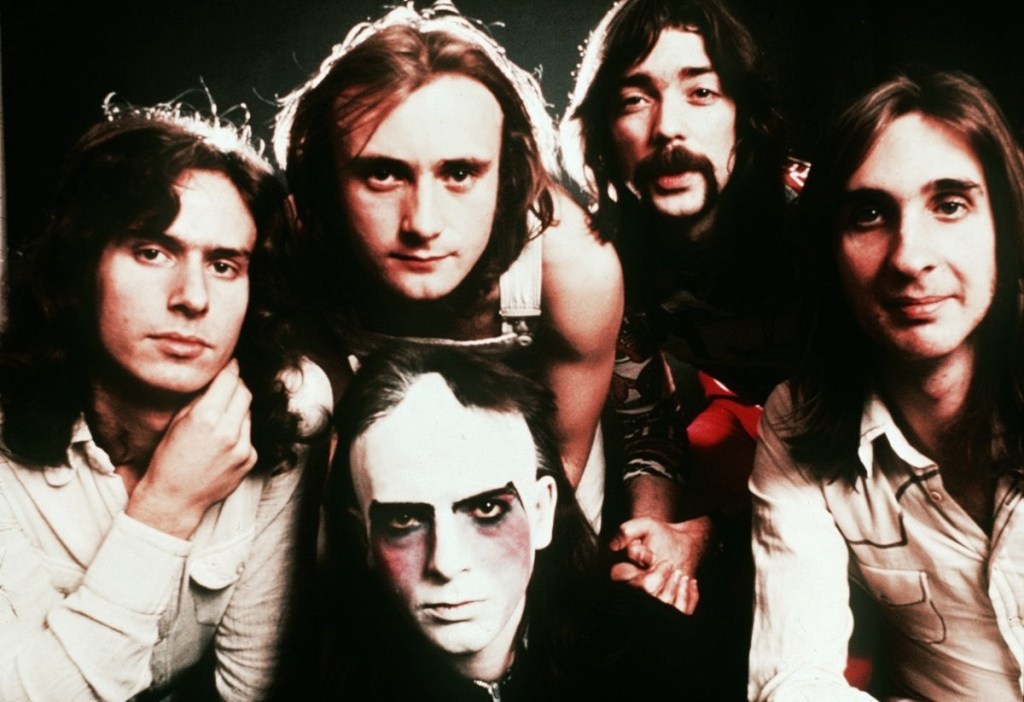
And there is absolutely no question who tops the list, though the numeric gap – 14.5 standard devations – is astonishing. While I likely heard “Follow You, Follow Me” on the radio in 1978 and 1979, it was “Turn It On Again” and the rest of 1980’s Duke that first captured my imagination. At the time, though, Gabriel – who left Genesis in 1975 – was my favorite artist. Over the next few years, however, I purchased 1981’s Abacab and 1983’s Genesis, while discovering their earlier work via the 1977 live album Seconds Out and their 1976 studio album Trick of the Tail. I first saw them live at JFK Stadium in Philadelphia in June 1982, when they headlined a bill with Blondie, Elvis Costello & the Attractions, A Flock of Seagulls and local favorites Robert Hazard and the Heroes. They are tied with Ridgway for most times seen live (4). I own 209 Genesis tracks across 20 full albums (14 studio) and two archival collections, as well as three Genesis-related VHS cassettes, three books devoted to them and two books of sheet music. A Trick of the Tail poster adorned multiple bedrooms, along with one for Gabriel’s So. Besides the solo work of Gabriel (#6), Collins (#29) and Banks (#67), former lead guitarist Steve Hackett, whom I met in 2003, sits at #151. When I recorded the six-cassette Boston Drive series in August 1989, I devoted an entire cassette side to Genesis. And when I married Eleanor “Nell” Broley in October 2007, I walked down the aisle to an instrumental recording of “Entangled” by The Classic Rock String Quartet.[5]
In short, while Davis recorded my favorite track (“Blue in Green”) and album (Kind of Blue), and while I own 191 Ridgway tracks (including 23 by Wall of Voodoo and the 37 he recorded with wife Pietra Wexstun), and while The Cars, Gabriel and Roxy Music also have a very strong “hold on my heart,” Genesis is my favorite musical artist.
Two final notes on face validity.
When Walter Becker died in September 2017, I wrote an essay memorializing him and my ever-increasing love of the band he co-founded, Steely Dan. That essay, in which I traced the history of their tracks’ appearances on mixes, is really the starting point of this series. Toward the end of the essay, I noted that Steely Dan had risen from being roughly my 50th favorite artist, to somewhere in the high teens – though with recent plays and purchases, they had probably moved even higher. Their #12 ranking confirms this.
In the two-plus decades since I last formally ranked my favorite artists, meanwhile, I used a simple product as a rough approximation: number of tracks on mixes and number of albums owned (owned in full plus number of tracks on non-traditional albums divided by 10); this method prioritizes ownership over track/album ranking. Fully 80 artists appear on both top 100 rankings, with Bowie (#7) and King Crimson (#10) replacing The Cars (#12) and The Police (#16) in the top 10. In a (non-random) sample of 181 artists, the average rank difference is -13.6, with an absolute value of 36.7. The correlation is a solid 0.74 (which will only increase with the calculation the simple sum for more artists), yet more evidence my current algorithm has very high validity.
***********
So, what have we learned?
Besides, of course, that any personal ranking of art (music, movies) is extremely difficult to do with any objective methodologic rigor – even if back-of-the-envelope methods serve admirably in a pinch.
The first takeaway is that any such process requires ample clean data – which, in turn, requires careful and ongoing data collection. When I first ranked my favorite music in January 1993, I had only recorded 1,163 tracks onto a mix – roughly one-third what I have 30 years later – and I only entered about half of them into my first Excel workbook, because I began with August 1989 (not August 1981). This meant I was only utilizing half of one possible data source.
When I reconstructed the workbook in December 2003, I had 1,865 tracks – roughly half what I have now – albeit with complete mix-appearance data. Thirteen years later, I had topped 3,200 tracks on mixes – but now was faced with the question of what to do with the 400 or so tracks that only ever appeared on bathtub and other non-traditional mixes. In retrospect, I should have integrated their contents sooner.
In the meantime, though, I had curated more than 9,000 tunes in my iTunes, complete with carefully-assigned information on initial year and mode of release, 62% of which had never appeared on a mix – but did have recorded numbers of plays, as did many tracks which had appeared on mixes.
This finally led me to estimate number of plays for older mixes – and a corollary takeaway: do not rely on a single data source, however comprehensive. By also looking at number of plays, I was able to reduce mix appearances to its essence – burnout-adjusted total appearances and temporal spread.
Which brings us to the third takeaway: reject invalid data analysis methods. I was fixated for years on the idea I needed to take first and most recent mix appearances into account. It was only while analyzing these data earlier this year that I realized the former simply measures when a track first came to my attention while the latter over-weights recency. I was also convinced that mix-appearance midpoint – not too long ago, not too recent – was also necessary. In the end, though, simply looking at the standard deviation of year in which a track appeared on a mix most efficiently addressed first, middle and last mix appearances.
In other words, keep it simple! Because I was trying to tease more information out of mix appearances than was available, I created ever more elaborate metrics – like assigning “0” to mix appearances which presaged burnout. These were clunky and time-consuming to update. In the end, though, I used just three metrics – total mix appearances and their temporal spread, and estimated total plays. I also made the updating of track rankings as “turnkey” as I could, eschewing factor analysis and other unnecessarily-complex measure-combining methods. The latter are often seductive, but generally add time and effort while yielding little – if any – additional information.[6]
Note, however, that reaching this point required decades of mix construction, music acquisition, and data cleaning and (re)organization. Few people are as…call it “committed to the process”…as I am, so your highly-valid music-ranking algorithm may be far simpler than my “simple” process. I am genuinely interested in your personal ranking methodology, if you wish to share it.
Until next time…and if you like what you read here, please consider making a donation. Thank you.
[1] With Big Audio Dynamite, The Dave Brubeck Quartet, The Eagles, Michael Jackson, Tom Jones, Morrissey, The Producers and Squeeze
[2] One track on Bananarama’s Deep Sea Skiving is credited to “Bananarama (w/Fun Boy Three),” one track on Elton John’s Leather Jackets is credited to “Elton John (with Cliff Richard),” and one track on Wham!’s Make It Big is credited to “Wham! featuring George Michael.”
[3] Thus, the 1962 album Money Jungle is credited to Duke Ellington with Johnny Hodges and Max Roach.
[4] Vega will rise a few dozen slots once I purchase of the remainder of her first two studio albums, Suzanne Vega and Solitude Standing.
[5] Nell was supposed to walk down the aisle to a different piece of music, but technical difficulties meant it was “Entangled” for her as well.
[6] Nearing the end of my doctoral thesis data analyses in the summer of 2014, I put my foot down and told a committee member that the sophisticated regression models she was having me try (and with which she was barely familiar) were taking hours – if not days – to run and yielded difficult-to-interpret results. Basically, they were a complete waste of time.

 Just Bear With Me...
2 thoughts on “Measuring the Unmeasurable: Ranking One’s Favorite Music, Part 7 (My 100 Favorite Artists and Conclusion)”