
On the evening of January 4, 2025, my wife Nell and I watched Saturday Night. Jason Reitman’s 2024 film chronicles the final 90 minutes before the first episode of what is now called Saturday Night Live aired at 11:30 pm EST on October 11, 1975. We thoroughly enjoyed the film’s you-are-there verisimilitude, strong performances and smooth long takes, even if Reitman stretches the truth more than I care to admit.
If memory serves, the only films I had watched over the preceding few months were six silent films from the 1920s. Four were made by Buster Keaton: The Cameraman, which I was watching for the first time, plus The Navigator, Seven Chances and Steamboat Bill, Jr. for the second time each. The other two were Russian films I was watching for the third time in six years: Battleship Potemkin (Sergei Eisenstein, 1925) and The Man With a Movie Camera (Dziga Vertov, 1929). I was inspired to rewatch Battleship Potemkin by learning my 13-year-old maternal great-grandfather Jacob Gurmankin lived in Odessa, in what is now Ukraine, when the events of the film take place.
Watching these films was something of an exception to the rule at the time. When I plopped down on the living room sofa to unwind late at night/early in the morning, my preference was to watch YouTube videos. More often than night, these videos analyzed a film, or a set of films.
Still, as much as I enjoy learning about films and film history, I am not a film critic in the traditional sense, I am an autodidactic enthusiast who approaches film as a historian and data analyst, not as a film student. When I write about film here – which I have done surprisingly often since launching Just Bear With Me in December 2016 – I typically present quantitative analyses of a related set of titles, including assessing my own tastes. On the rare occasions I devote an essay to a specific film, I am not critiquing that film in the normal sense. Rather, I use a title or titles to address such broad ideas as the instinctive fictionalization of history, unreasonable romantic expectations or how best to interrogate memory, something I did twice.
All of which makes what happened on January 5, 2025 – and the remainder of this essay – so unusual.
I rewatched Saturday Night.
Prior to that, the shortest gap between my first and second viewings of a film was a bit less than six months. Early in July 1985, a buddy and I watched Back to the Future (Robert Zemeckis) in a suburban Philadelphia movie theatre, probably the Eric Twin Ardmore, then at 34 W. Lancaster Avenue. We and a third buddy saw it again when it was rereleased that December, likely at the Budco Orleans 8, then at 2247 Bleigh Street in Northeast Philadelphia. This second viewing was during the last week of the month, after I returned to the Philadelphia area for Yale’s winter break.
Still, the rapid rewatch of Saturday Night would likely have remained an anomaly but for what happened 11 days later.
My hero David Lynch died.
Nell’s and my older daughter and I sat down at the counter of the Denny’s on Route 1 in Attleboro, MA early on the morning of March 16, 2025. Older daughter soon became engrossed in her iPhone, so I grabbed a napkin from a nearby stack and began to write a list of film titles. I wanted to recall every film I had seen – and how many times – since Lynch died, and I began to watch films regularly again. Titles with a checkmark next to them are those I watched for the first time.

True to form, I reacted to Lynch’s death – once I had regained my composure – by watching YouTube videos about his life and art – then writing an essay about his time in Philadelphia. Only then did I decided to watch first Wild At Heart, then Eraserhead, for a second time. The former film had made little impression on me when I first saw it sometime in the 1990s, when the only Lynch films I had ever seen were The Elephant Man and Blue Velvet. I then watched Mulholland Drive early in 2002. It was the first film that confused me so much I needed to ask folks what they thought of it, while also seeking guidance on the internet. As Nell points out, it clearly made a strong (positive) impression on me. It is now one of my 10 favorite films. Meanwhile, I did not love Eraserhead when I first watched it about eight years ago, as I became increasingly enamored with Lynch’s work after finally watching the first two seasons of Twin Peaks.
While I was pleasantly surprised by Wild At Heart, I have no desire to see it a third time. Eraserhead, though, is a different story. Now understanding how much it reflects Lynch’s experience living in Philadelphia in the late 1960s, when I was born in a hospital at 3rd and Spruce Streets, demolished several years later as part of city planner (and father to Kevin) Edmund Bacon’s vision of urban renewal, I had a new appreciation for it. Rather than be put off by the grotesqueness of the “baby,” the man in the planet and the woman in the radiator, I appreciated its dark beauty and sly humor, especially when the elevator doors take forever to close. I will watch it again at some point.
Which brings us to Inland Empire.
I was meh on Inland Empire when I first watched it about seven years ago. For some reason, though, it stuck with me – so I watched it again a few years later. And as had happened with Eraserhead, as well as Dazed and Confused, The Godfather, Tenet and, especially, the 1947 version of Nightmare Alley, I liked it far more the second time. It is a truism that you need to watch a film once for the basic story, then a second time to appreciate everything else about it. But not only did I watch Inland Empire a second time, I then watched it a third time. And after rewatching Wild at Heart and Eraserhead in January, I watched Inland Empire for a fourth time – then a fifth time. Setting aside the 22 Fox Charlie Chan films and three films by The Marx Brothers (Animal Crackers, Monkey Business, A Night at the Opera), there only a few dozen films I have seen that many times. In fact, Inland Empire has joined Mulholland Drive in my personal top 10.
Rewatching those three Lynch films, meanwhile, after having just watched Saturday Night twice in two days, awakened the film lover in me – and I began a personally-curated 2025 film festival. The rest of this (and any subsequent) essay presents my brief thoughts on these films, roughly in the order I watched them.
I reiterate that these are merely impressions – not the critical analyses of an accredited film scholar.
Seven French films
For reasons I forget, I began by rewatching a series of French films, beginning with Louis Malle’s astounding 1958 crime thriller Elevator to the Gallows (Ascenseur pour l’echefaud).1 I had first watched it about 10 years earlier, as I began to expand my “film noir” horizons beyond American and British films. Knowing the score was written my Miles Davis – my third favorite musical artist, behind only Stan Ridgway and Genesis – made the initial decision to watch it easier. I enjoyed it even more the second time, especially Jeanne Moreau’s aimless and lovelorn meandering through the real night streets of Paris. I had thought the only other Malle film I have seen is his 1980 love letter to a fading Atlantic City until I checked the Internet Movie Database (IMDb) and saw he also directed Pretty Baby (1978) and My Dinner With Andre (1981). I have seen the latter three films once – Pretty Baby was one of several films I watched on HBO2 that were perhaps inappropriate for a 14- or 15-year-old.3 As problematic as the plot of Pretty Baby is, and as much as I dislike Susan Sarandon, I am tempted to revisit it someday.
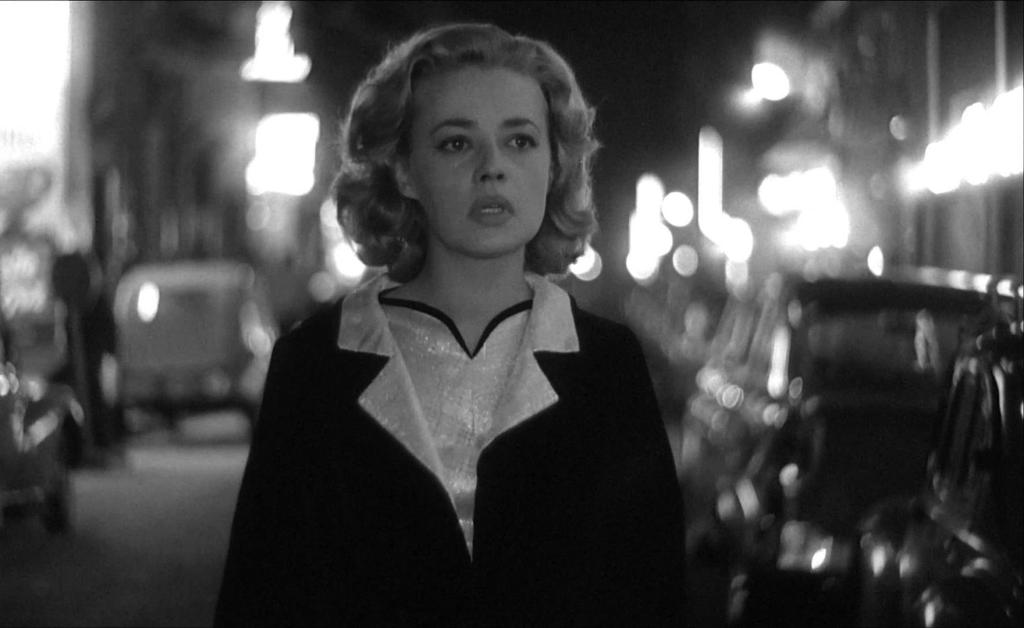
Continuing the “French film noir” theme, I then rewatched Jean Luc Godard’s 1965 noir-science fiction hybrid Alphaville (Alphaville: Une étrange aventure de Lemmy Caution). As much as I enjoyed the urban night black-and-white cinematography and tracking shots through labyrinthine hotel hallways, I felt the same vague disappointment I had a few years ago when I rewatched Two Men in Manhattan (Deux hommes dans Manhattan; Jean-Pierre Melville, 1959). In neither film does the long day’s journey into night lead anywhere interesting – Alphaville gets bogged down in ill-articulated philosophy, while the end of Two Men is simply anticlimactic.
Far more engaging was my rewatch of Alain Resnais’ 1961 hypnotic black-and-white puzzle-box Last Year At Marienbad (L’année dernière à Marienbad). This is not to say I completely understand this journey through the mind – shown as the opulent hallways of a massive ornate hotel in the French countryside – of an unreliable narrator. I picked up new clues, though, including the game (Nim) everyone who plays appears to lose, as though a certain outcome is predetermined, no matter which way we start – or attempt to rewrite the past in our memory. The ending, though, suggests my interpretation is incorrect. Unanswered questions aside, this is a great film to watch while letting your mind wander.
Staying with French surrealism, I tried to find a copy of Jean Cocteau’s experimental 50-minute 1930 film, The Blood of a Poet (Le sang d’un poète). There once was a terrific YouTube channel called One Hundred Years of Cinema. Its owner discussed, starting with The Birth of A Nation in 1915, one or two films each year that typify a particular aspect of film history.4 This is how I first learned about The Man With a Movie Camera, now one of my 100 favorite films, and Battleship Potemkin. It is also how I learned about Cocteau’s 1946 masterpiece Beauty and the Beast (La Belle et la Bête), which I plan to revisit someday. From there I traced back to Blood of a Poet – with its famous shot of a man “falling into a mirror,” cleverly referenced in the video for “Hourglass” by Squeeze. The only version I could find did not have English subtitles – but I watched it anyway for the innovative and evocative imagery.
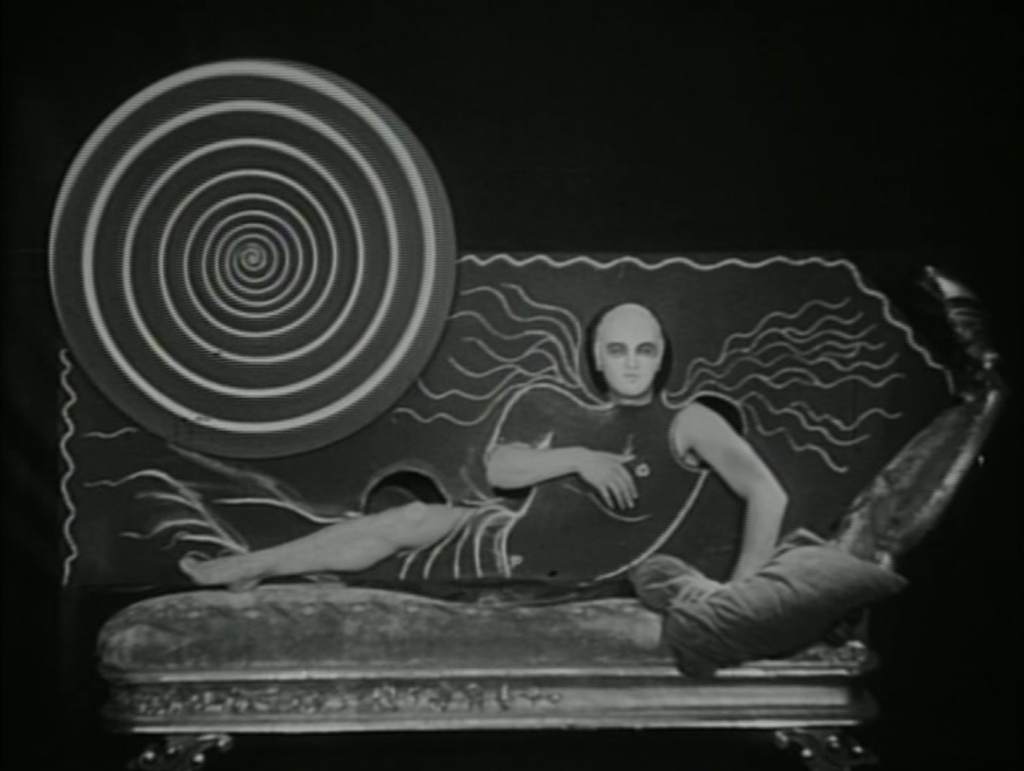
From Cocteau to the second and final cinematic collaboration between surrealists Luis Buñuel and Salvador Dalí: L’Age d’Or, also from 1930. I was more tepid in my enjoyment, especially compared to how much I love Un Chien Andalou, their 1929 masterwork. Were it about 30 minutes longer, it would be in my Excel workbook of films I have seen multiple times, as would be Maya Deren’s magnificent short films Meshes of the Afternoon (1943) and At Land (1944). Perhaps extending the runtime from 16 to 63 minutes forced the two men to devise a more traditional narrative through-line – I hesitate to call it a “plot.” There are certainly great moments – Lya Lys sucking on the toes of a statue and leading a cow out of her bedroom chief among them – but the whole is a bit less than the sum of the parts.
Sticking with Buñuel, though, I next rewatched The Discreet Charm of the Bourgeoisie (Le charme discret de la bourgeoisie; 1972), which costars Delphine Seyrig, the female lead of Last Year in Marienbad. For one of the few times in my life, I liked a film less on a second viewing…or perhaps I was tiring of subtitles. What had seemed wittily absurd on first viewing – three men and three women constantly thwarted in their attempts to share a meal – now seemed forced and unfunny. I had forgotten how reprehensible the male characters are (which I suppose is the point – they are so, you know, “bourgeois”), though I was happy to see Jean-Pierre Cassel, a member of the brilliant ensemble cast of Murder on the Orient Express (Sidney Lumet, 1974), one of my handful of favorite films.
To wrap up this cinematic trip to France, I returned to what I think is Melville’s greatest film: Le Samouraï (1967). I first learned about this cool-as-ice film – its blue-gray cinematography is a knockout – from the 50 film “Canon” in The Rough Guide to Film Noir (Alexander Ballinger and Danny Graydon, 2007), enjoying it for the first time around 2009. It got a bit lost in the shuffle as I worked my way through the 15 or so Canon films I had not yet seen, but I always intended to revisit it. As with Eraserhead, Elevator to the Gallows and Last Year at Marienbad, I liked it even more the second time. Watching Jef Costello (Alain Delon) methodically act as a hitman-for-hire is an exercise in cinematic slow burn, from the patient stillness of the opening scene to the way Costello finds the correct key on his massive ring. While the ending still hit hard, I better appreciated Melville’s cinematic sleight-of-hand. This is a film I would love to show our daughters one day – especially the older one, who is learning French.
Thanks to The Cinema Cartography
One of the YouTube channels devoted to analyzing film to which I was drawn used to be called The Cinema Cartography, but now is called The House of Tabula. Their videos did more to introduce me to films a bit outside my comfort zone than anyone else’s. To be fair, Lewis Bond can get a bit – overwrought – in his narration, but our shared passion for film as one of our greatest art forms comes through every time. Their two-hour meditation on the films of David Lynch – building on an early video about the elusive subconscious – is a terrific watch for anyone interested in film. The other filmmaker to whom they devoted so long a video was Andrei Tarkovsky, a name that kept popping up all over film YouTube.
However, before I finally dove into the works of the late Russian filmmaker – he was only 54 when he died from lung cancer in December 1986 – I made a small detour to what is now called Armenia. In 1969, though, when Sergei Parajanov made The Color of Pomegranates (Sayat Nova), Armenia was one of the 15 “socialist republics” that comprised the Soviet Union. The film had long intrigued me – it looked stunning visually – so early one morning I watched a preview on YouTube. I liked what I saw enough to watch a copy of the film on YouTube.
After watching a few videos about it, I watched it again – making it the first and only film (to date) I watched for the first and second times effectively back-to-back. That is how knocked flat I was by its poetic visual flair, its rich use of color and its intricate framing, which led me to think, “Wes Anderson has watched The Color of Pomegranates more than once.” Those videos informed me the film tells the life story of 18th-century Armenian troubadour Sayat-Nova solely through imagery, with occasional excerpts from his poetry. No matter, this is another film in which one can lose oneself, giving the mind free rein.

And with that I was ready to watch my first Tarkovksy film. But, which one?
One is often told to begin at the beginning, which for Tarkovsky is Ivan’s Childhood (Ivanovo detstvo; 1962). I was also intrigued by a snippet of one of its wistful dream sequences. It only took the opening sequence – Ivan’s memory of a happier time before Nazis killed his family ending abruptly as Ivan awakes with a start in a burned-out barn – for me to think, “Oh, this is why people rave about Tarkovsky!” There is a raw beauty to this film, both in its black-and-white cinematography and in the way its characters never become dehumanized by the inhumanity of war. The renowned “kiss” sequence has been recreated many times, but never equaled. The ending is a gut-punch to be sure, but it works well within the context of the film. Ivan’s Childhood simply could not have ended any other way.
I then turned to one of the three movies most often referenced in discussions of Tarvovsky: Mirror (Zerkalo; 1975); the other two are Stalker (1979) and Solaris (1972). Watching Mirror the first time, I was unenthused, perhaps because I was struggling to keep the timelines straight. That said, I was riveted by the dual performances of Margarita Terekhova – the former Soviet Union’s answer to Meryl Streep – and I was impressed by the cinematography, particularly during what I understood to be dream sequences. So…I watched it again a day or two later, and this time I absolutely LOVED it – the slow pacing, the seamless drift between time periods, its refusal to provide easy answers. It is a gorgeous film that requires you to pay close attention, perhaps multiple times.

By contrast, I deeply disliked Stalker. Critics praise its gritty meditation on faith in an increasingly secular world, and that is precisely where the film loses me. I am a Jewish-raised atheist with little use for the irrationality and superstition demanded by organized religion. Without those aspects, the film felt like an endless slog through ugly abandoned places with three unappealing men. I never felt any suspense or tension, and when we finally get to the “room,” I thought, “That’s it? THIS is what I have waited over 2½ hours for?” Mine is clearly a minority position – it scores 8.0 on IMDb and 100% and 92%, respectively, from critics and viewers on Rotten Tomatoes – but I have never been one to go along with the crowd. And that is how it should be – we need to make our own cultural choices.
I considered watching Solaris next, despite learning Tarkovsky himself did not love it, but after 11 older foreign-language films watched a total of 14 times, I was ready for more recent English-language films. Still, that Solaris is considered the “anti” 2001: A Space Odyssey, another favorite of cinephiles that mostly bored me, means I will likely watch it sooner rather than later.
By now, meanwhile, I realized that I was curating my own personal film festival. I forget the order in which I watched the next 15 films, so I group them by loose category.
Watched with older daughter (I)
Sometime in February, I decided to come home to the United States by rewatching Zodiac, David Fincher’s intricate recreation of San Francisco Chronicle cartoonist Robert Graysmith’s personal obsession with learning the identity of The Zodiac, the serial killer who terrorized the Bay area in the late 1960s and early 1970s. Nell and I saw this film in the theatre soon after it was released in March 2007. While I am not really a fan of Fincher’s films, I love two set explicitly in San Francisco: Zodiac and The Game (1997). I invited our older daughter to watch it with me, knowing her affinity for true crime (and serial killers, specifically), and she enjoyed it. She recognized Robert Downey, Jr. and Mark Ruffalo from the Marvel films, and she had heard positive things about Jake Gyllenhall. I had forgotten Anthony Edwards – a favorite since Revenge of the Nerds (Jeff Kanew, 1984), which has not aged well, and The Sure Thing (Rob Reiner, 1985) – was in it, and I am always delighted to see Chloe Sevigny. We will return to Edwards.
Older daughter liked Zodiac enough that she metaphorically dusted off her list of films she wants to watch. At the top of the list was No Country For Old Men (Joel & Ethan Cohen, 2007), a film I was happy to watch for a third time. She absolutely loved it – and Llewelyn Moss (Josh Brolin) became one of her “GOATs” (greatest of all time), joining such members of the Philadelphia Phillies as third baseman Alec Bohm and starting pitcher Aaron Nola. She was amused that Brolin also played Thanos in the Marvel films, and she recognized Woody Harrelson from The Hunger Games franchise. One of her recent birthday gifts was a large No Country For Old Men poster for her bedroom wall.
We followed this up a few days later with the 1922 version of Nosferatu: A Symphony of Horror (Nosferatu, eine Symphonie des Grauens; F. W. Murnau). This was my third time watching this haunting, if slow at times, film. Knowing Robert Eggers had recently reimagined the film, she wanted to watch the original, just as she wants to watch the original All Quiet on the Western Front (Lewis Milestone, 1930), which I have yet to see myself. She was more neutral on Nosferatu than Zodiac and No Country For Old Men, especially after her younger sibling “ruined” her experience of watching it (with me) by joining us for the last quarter or so of the film, cackling at the appearance of Knock (Alexander Granach). Happily, this only put older daughter off film-watching for two months, as we will see.
To be continued…
Until next time…and if you like what you read here, please consider making a donation. Thank you!
- Every time I mention Louis Malle to Nell, she asks, “You know who he was married to, right?” I always forget, then she reminds me it was Candice Bergen. ↩︎
- Newspapers.com reveals it aired on HBO at 3 pm on Sunday, November 9, 1980 and Saturday, November 15, 1980. ↩︎
- I address this in more detail in Chapter 10 of my Interrogating Memory book. ↩︎
- For some reason, there has not been a video since one comparing the 1948 versions of Hamlet and Macbeth. ↩︎

 Just Bear With Me...
3 thoughts on “My 2025 Personal Film Festival, Part 1”